
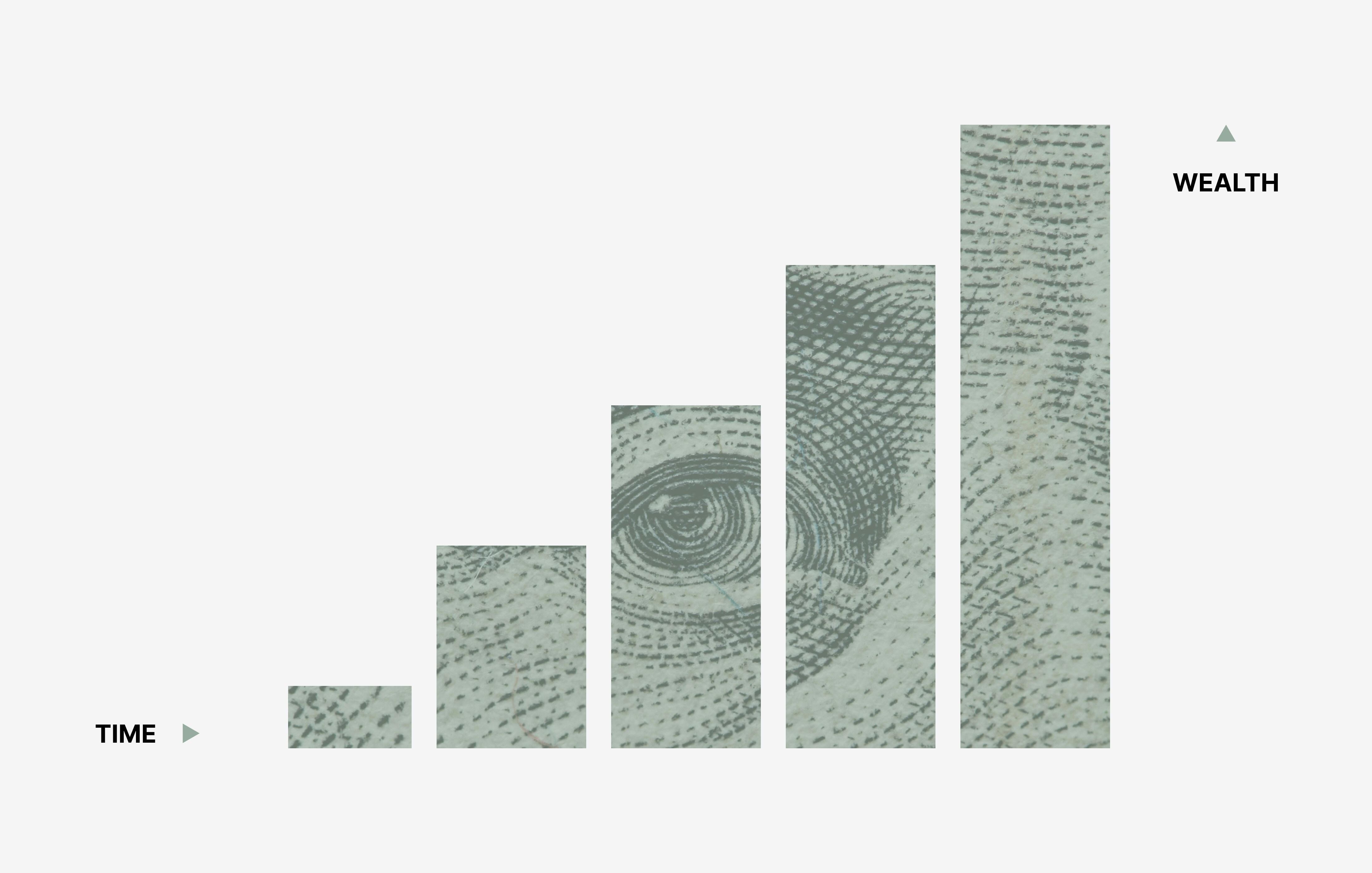
Compounding: How Money Can Grow Over Time
What is compounding?
Compounding is when money earns money, and then that new money can also earn money over time.
A simple way to think about it is: your growth can start to build on itself.
Compounding is growth on top of previous growth.
Simple Compounding
Imagine you invest $1,000 and it earns 5% in one year.
$1,000
$1,050 after 5% growth
The next year, if the money stays invested, you are earning on $1,050 instead of just the original $1,000. The extra $50 may seem small at first, but over time, compounding can become more powerful because each period has the chance to build on the last one.
Reinvesting Dividends Over 10 Years
Imagine two people each invest $10,000 in an account that earns a 4% dividend each year. To keep the example simple, assume the investment price does not change.
Account A: Dividends are not reinvested. The investor takes the dividend as cash each year.
$10,000 × 4% = $400 annual dividend
$400 × 10 = $4,000 in cash dividends over 10 years
Account value after 10 years: $10,000
Account B: Dividends are reinvested. The investor uses each dividend to buy more of the investment.
Starting value: $10,000. Each year's 4% dividend is reinvested.
Account value after 10 years: about $14,802
Account A without reinvestment: $10,000 account value + $4,000 cash dividends = $14,000 total
Account B with reinvestment: about $14,802 account value
This example shows how reinvesting dividends can increase the effect of compounding because each dividend buys more shares, and those additional shares may generate their own dividends in future years.
This is only a simple illustration. Real investments can rise or fall in value, dividends are not guaranteed, and investors can lose money.
Why time matters
Compounding usually becomes more noticeable over longer periods of time. The more time money has to remain invested, the more chances it has to grow and build on prior growth.
| Time frame | How compounding may feel | Key idea |
|---|---|---|
| Short term | Growth may feel small or uneven. | Liquidity and safety may matter more. |
| Medium term | Growth may become more noticeable. | Risk and timing both matter. |
| Long term | Growth can have more room to build. | Time can be a major advantage. |
Key points to understand
- Compounding takes time. It is usually more powerful over years, not days or weeks.
- Reinvesting can help. Reinvesting means keeping earnings invested instead of taking them out.
- Dividends can be an important part of reinvesting. A dividend is a payment that some companies or funds make to investors, usually from profits or income the investment has earned.
- When someone takes dividends as cash, they can use that money right away.
- But when dividends are reinvested, they are used to buy more shares of the investment.
- Over time, those extra shares may earn their own dividends and may also grow in value, which can help compounding work more effectively.
- This does not guarantee a profit, and dividends can change or stop, but reinvesting dividends is one common way investors try to build wealth over the long term.
- Consistency matters. Regular saving or investing can give compounding more to work with.
- Returns are not guaranteed. Investments can rise and fall in value, and some investments carry the risk of loss.
- Starting earlier can help. More time can give money more chances to grow.
Home equity connection
Compounding is often discussed with investments, but the broader idea of growth over time can also help people understand home equity.
- The home may increase in value over time.
- The mortgage balance may go down as payments are made.
As a result, a home can become a major part of a person's long-term wealth.
However, home equity is different from cash because it is not automatically easy to access. A homeowner usually needs to sell, borrow, refinance, or use another financial product to turn home equity into money they can use.
Why compounding is important
- It helps explain why long-term investing can be powerful.
- It shows why time horizon matters when setting financial goals.
- It helps people understand why small, consistent actions can matter.
- It can help people think about the difference between short-term spending and long-term wealth building.
- It connects savings, investing, and home equity into one broader wealth-building conversation.
Common examples of compounding
- An investment account where earnings are reinvested.
- A retirement account that grows over many years.
- A savings account that earns interest on both the original balance and past interest.
- A home that may build equity over time as the mortgage balance declines and the home value changes.
- A dividend-paying investment where dividends are reinvested to buy more shares.
Summary
Compounding is one reason time can be so valuable in building wealth.
The earlier money is put to work, the more opportunity it may have to grow on itself.
Important reminder
- Compounding can help money grow, but it does not remove risk.
- Investments can lose value, and different investments carry different levels of risk.
- A smart plan should consider goals, time horizon, liquidity needs, risk tolerance, and overall financial situation.
Educational content only. Not individualized financial advice.